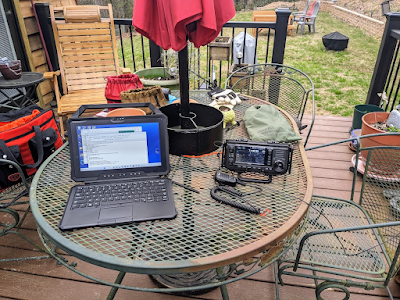
On 07 October, Georgia ARES and AUXCOMM conducted a state-level NVIS exercise. It was designed to test voice and digital comms between ARES groups around the state and the two Georgia Emergency Management Agency (GEMA) operations centers. GEMA runs one state operations center (SOC) at its headquarters in Atlanta and a back-up ops center in Forsyth, Georgia. As far as we know, this is the first time an exercise like this had ever been held.
A few days ago I did the final wrap-up on the exercise by holding the on-line AAR briefing. You can view the presentation slides at this link, and view the AAR session here:
Overall the exercise was a success, and it helped us better identify some issues that I believe ARES and EMCOMM here in Georgia need to focus on.
Before going further, I need to remind all readers that this is my blog, and these are my observations and recommendations, and they do not represent any official Georgia ARES positions or recommendations.
- Participation. For decades, Georgia has been struggling with low ARES and Amateur Radio participation in the largely rural southern and eastern parts of the state. Georgia is a big state - the biggest east of the Mississippi in terms of contiguous land area. Most of the population is concentrated in the Atlanta metro area, but that only consists of 14 counties out of a total of 159 (9%). Amateur Radio activities, participation and infrastructure in the Atlanta metro region, and all the way down the I-75 corridor to Macon, is strong. However, participation in any ARES activity from the areas east and south of the Atlanta - Macon line is weak. In fact, the region below a curved line running from Augusta to Columbus is known as the 'silent crescent' (the shaded area in the map below). ARES and Amateur Radio have very poor representation in this region - it's just hard to find the people to participate in activities like this exercise. Yet, it's these counties that end up needing disaster recovery and communications support the most. They are square in the target area for spring and summer storms pushing into the state from the west, and any hurricane or tropical storm pushing up from the Gulf of Mexico or Atlantic coast hits these counties hardest. It's accurate to say that tropical storms coming up from the Gulf vent their fury as dying hurricanes in these southern counties before wandering north towards Atlanta as little more than moderate rain and wind events.
There is no easy fix for this lack of participation. It's due to a combination of factors - mostly rural areas with low population densities and lower income levels certainly has a lot to do with it. I don't have a solution to this problem, but it is something ARES needs to work on going forward.
 |
| The 'silent crescent' encompasses all counties south of the Augusta - Columbus line |
- Digital vs. voice. Honestly, I didn't anticipate this being as big an issue as it turned out to be, but two separate issues quickly coalesced to bring the digital vs. voice issue to the forefront. As we planned this exercise we knew we wanted to have a digital portion to see if participating stations found a difference in their ability to connect to the SOCs on voice and digital. Although Georgia ARES runs regular digital nets on PSK-125 and MT-63, most folks show up for just the voice nets. The digital portion of this exercise was just supposed to be a confidence builder - a quick check-in with the SOCs to confirm that their digital setups work. But a lot of stations, including the SOC at GEMA HQ in Atlanta, struggled with properly running Fldigi. In general, many participants struggled with digital operations - less than 2/3 of the stations that made successful voice contacts on 80, 60 & 40 meters made successful contacts on digital. This doesn't mean digital doesn't work, it means we need to pick a better mode (we used PSK-31) and improve the digital operations experience base for all of Georgia ARES.
Early in the planning process we identified the need for a simple back-channel chat tool that would allow the SOCs and participating stations to coordinate activity without interrupting the exercise operations. This chat tool became more important than we anticipated, as poor operating conditions had us moving band-to-band to find a usable frequency. The tool we picked, like all the tools we looked at, was web based. This meant everyone using it had to be on the internet. However, one of the goals of the exercise was to simulate a cyber-denied scenario - no internet at all. In this scenario all of the chat tools we're familiar with - Slack, Telegram, FB chat, Discord, Groups.io, etc. would not be available. The need for a chat tool doesn't go away, just the ability to use it. It's precisely this scenario where several good point-to-point HF communications tools pop up, and are all digital - Fldigi running MT-63 (already an adopted Georgia ARES standard), JS8Call and VarAC (Vara Chat). All of these tools have the capability to fill the one-to-one or one-to-many operator chat and coordination tool role.
Digital operations offer huge advantages over voice. MT-63 running in Fldigi and JS8Call offer great weak signal performance, particularly JS8Call, which is based on a modification of the FT8 protocol. JS8Call can decode traffic when it can't even be seen on the spectrum waterfall. VarAC uses Vara as the soundcard transport mode, and Vara is world famous for it's ability to hold a connection through rough band conditions. If a connection is lost, VarAC can be configured to automatically try to re-establish the connection. It's tenacious. This all means that digital modes offer more reliable and overall faster traffic throughput than voice communications. These tools can also run in unattended mode, pass small messages, and in the case of JS8Call and VarAC, can handle automated band and frequency changes based on time of day. They can also stage and pass traffic through intermediate stations using a 'traffic parking' function. In short, these software packages can be configured to automate a lot of the functions that an ARES operator would normally do manually. Again, reduced error, improved throughput and reduced operator workload.
What about Winlink? Nothing I propose here impacts Winlink; it remains the primary tool for passing email, ICS traffic and small files. It's the heavy-weight tool that will handle most of the formal traffic. What's proposed here is an adjunct tool that sits side-by-side with Winlink and handles those real-time coordination tasks
Pulling this all together, I believe the future of HF-based emergency communications support lies in digital, not voice. If we're serious about providing robust communications that actually fill a need, it'll have to be more than a bunch of guys and gals talking into microphones. The great news is that we've got excellent digital tools that were not available to us just five years ago. It's time to leverage them. Let's flip the paradigm and make digital comms the primary standard in Georgia ARES, voice the secondary. Then pick a tool, but just one tool! Build a state-level communications architecture around it; installation packages, documentation, configuration files, even a virtual help desk, and train hard against real world scenarios.

Not to toot my own horn, but heck, why not. I wrote about this issue back in 2020 in a series titled The EMCOMM Layer Cake. If anything, our software options have improved since then. Winlink's gotten better, JS8Call's gotten better, VarAC has hit the streets. Even Fldigi has seen improvements. The emergence of Vara as an unofficial standard that rivals Pactor in speed and connection reliability has had a huge impact on Winlink operations. I expect to see other applications, similar to VarAC, build out dependencies on Vara to take advantage of its excellent connection properties. If you are involved in emergency communications at any level and haven't bought a Vara license yet, I would just go ahead and do it; it's almost inevitable that having one will be a requirement in the near future.
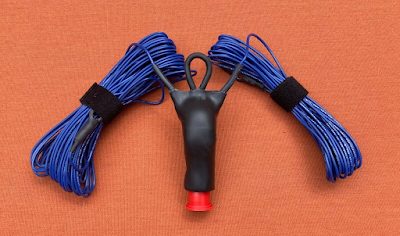
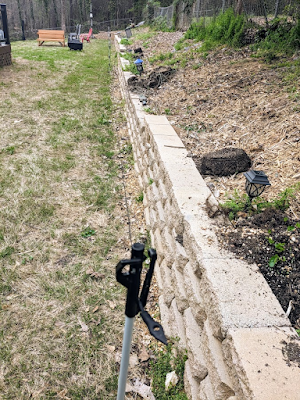
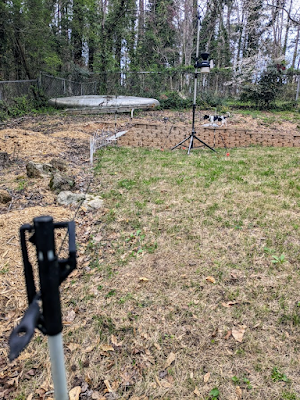
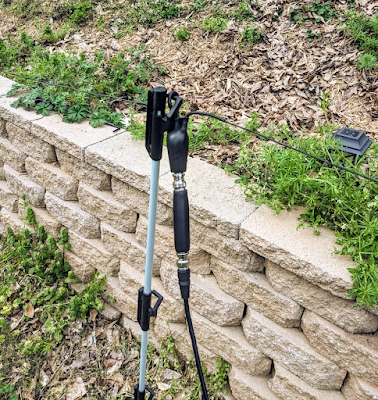
- NVIS. This was billed as an NVIS exercise, so did NVIS work? As I emphasized in the run up to the exercise, it's not about how far you can talk, but how close you can talk on 40, 60 & 80 meters. We all know we can talk from Dalton to Kings Bay (about 350 miles) with no problem on our 80 and 40 meter dipoles, but can we talk from the State Operations Center in southeast Atlanta to the EOC in Fayette County (about 20 miles) on 40 or 80 meters? That was the challenge the exercise posed. Although I don't have hard numbers, I can say based on our experience at the Atlanta SOC at GEMA HQ the answer is yes. The antenna we used was the Chameleon CHA-NVIS, a modification of the US Army's AS-2259/GR NVIS antenna. We got excellent signal reports from most counties in the immediate metro Atlanta area on 40 meters. Was it the antenna? Was it just good 40 meter propagation? We can't tell for sure, but based on my limited use of this antenna for other NVIS work I have to say that this particular antenna configuration offers excellent NVIS performance.