28 July 2019

APRS.fi

Yesterday I was following an Amateur Radio balloon launch event put on by a nearby ham radio club, the Bill Gremillion Memorial Radio Club. The balloon carried an APRS tracker and all flight activity was available on the APRS.fi website. I was reminded just how great a service the APRS.fi site is, and figured it was time to give it some coverage.

When I stepped away from Amateur Radio a little over a decade ago the service known as APRS (Automatic Packet (not Position as many claim) Reporting System was moribund, kept alive by a few true believers. The decline in interest in APRS was due to a number of factors - the general decline in interest in packet radio with its slow AX.25 protocol (which APRS uses), and the kludginess and expense of much of the desktop client software. And then there's the ever present 'shiny new object' factor, so common in ham radio. New things like HF digital modes were becoming extremely popular and started drawing attention away from APRS.

APRS was developed in the 1980s by Bob Bruninga, WB4APR as a real-time local tactical communications system. I won't spend a whole lot of time reviewing the history of APRS, instead I'll let Bob lay it out, in an article he wrote in March of 1999 and updated in 2013.

One of the Achilles heels of APRS in the early years was the lack of good map interfaces. This was long before the availability of on-line services like Google Earth or Google Maps. There was some good client software available, but the map interfaces were either small scale wide area maps, many just roughly georeferenced screen captures, or the user had to buy a third party mapping program. I used the excellent UI-View software published by Roger Barker, G4IDE (SK), but had to purchase a mapping package called Precision Mapping (on CD) produced by a company called Undertow Software for an additional $50. There was a somewhat awkward relationship between UI-View and the Precision Mapping files, but it worked.

Fast forward a decade and things have changed - for the better. One of the things I noticed was the rise of the AX.25 'KISS' protocol. Ham radio manufacturers like Yaesu and Kenwood figured out it was easy and cheap to implement a KISS TNC in their radios, making them APRS ready right out of the box. Sadly, Icom seems to have forgotten about APRS since it developed a slavish devotion to DSTAR and it's 'sorta-like APRS' function known as DPRS.

Next is the development that I think really saved APRS - the excellent APRS.fi website.

APRS.fi web page showing a weather station feed - a very popular application

APRS.fi was launched in 2006 by Finnish developer Heikki Hannikainen, OH7LZB. APRS.fi uses the Google Maps application programming interface (API) to provide the worldwide map interface, and Heikki built a custom web platform that merges real-time APRS data and high resolution street maps (and satellite imagery), adds some user tools and makes it available freely to the Amateur Rado community. What APRS.fi does is remove the APRS client 'drama' that kept a lot of potential users at arm's length. With APRS.fi, APRS functionality is easily and immediately available on the web, on just about any hardware. If you can get to a web browser you can get to and use the APRS system.

There is a LOT going on behind the curtain with the APRS.fi system, and I'll let Heikki cover it in a presentation he did at the 2012 DCC conference in Atlanta. A bit geeky, but hey, we're all geeks, right?


With APRS.fi and a modern radio such as the Kenwood TH-D74 or the Yaesu FT2DR, which have built-in GPS receivers and APRS-ready KISS TNCs, there's no reason to not get active on APRS. So get out there and get tracking!

W8BYH out

06 July 2019

CommRadio CTX-10

I've hinted in this blog - or at least I think I have - that I purchased and I'm testing (a fancy word for 'playing with') a CommRadio CTX-10.


Up to this point I've held off on posting about the radio because it was having some teething issues, and I thought I would wait until CommRadio had a chance to mature the firmware. Well, CommRadio has successfully tackled the biggest firmware issues, so I think it's time for an initial review. Before going forward I also need to state that this radio is not a loaner from CommRadio. It's mine - I purchased it from CommRadio four months ago with the intention of using it, and using it hard, during field operations. The firmware version I tested against is v.1330. For particulars about the radio's features I encourage you to read the CTX-10 spec sheet on CommRadio's website.

First, just what is the CTX-10? The radio is the vision of one man, Don Moore, W0CTX, the owner of CommRadio. Don's background is in aviation communications system design and manufacturing, and as such he has the resources to bring his vision to market. Don saw the need for a small, lightweight, rugged and easy-to-use low power (10 watt) field radio based on SDR technology. Right now the market is flooded with QRP transceivers - the Yaesu FT-818, the Elecraft KX line, the Xiegu X5105, and more. All are good in their own way, but none met Don's vision of ruggedness and simplicity of use, a design that followed the aviation radio concept of 'push the button to talk, let the radio take care of everything else.' As such, the CTX-10 design emphasizes ruggedness and ease of use over a complex set of configurations and controls.

The CTX-10 is essentially the same size as the Yaesu FT-817/818

The CTX-10 is not a cheap radio - it clocks in at a penny shy of $1,000, and you still have to provide your own microphone, and sound card modem if you want to work digital modes. Some Amateur Radio operators I've shown the radio to have turned it over and over in their hands and asked, "Is this all you get for a thousand bucks?" I'll admit that at first glance the radio is not all that impressive - a tiny screen, six buttons, a VFO knob and a volume/multi-function knob. On closer inspection you do notice a few external things - the overall quality of construction and light weight. The exterior is a machined magnesium 'box' that is heavily finned for heat dissipation; there is no cooling fan on this radio. The VFO and volume knobs are machined aluminum and the operation is extremely smooth, with no 'wobble'. The rear of the radio is neatly laid out, with each connection port (power input, microphone, mini-USB, 6-pin mini-DIN, CW key, speaker & headset jack) sitting in a very cleanly machined 'well'.

The rear of the CTX-10. This is a computer design image, but the layout of the rear panel
is identical to the radios as manufactured. 

But to appreciate this radio you have to understand what's going on inside the magnesium case, and how it follow's the design philosophy:

  • Ease of use via a simplified command set - the focus is on communicating, not button pushing
  • Leverage the SDR architecture not to add 'bells and whistles', but to provide superior ease of use and performance by handling most operating parameters automatically in software, leaving the user to focus on communicating
  • Rugged, survivable design - not MILSPEC, but certainly capable of surviving rough handling and operating conditions that would put other radios out of service
  • Low power consumption and a superior internal power management system that eliminates much of the 'power angst' that accompanies most other portable radio designs
  • Integrate all of this - SDR transceiver, internal batteries, antenna tuner - into a package that can be carried anywhere and operated at a 100% duty cycle in austere or harsh conditions 

I'm no radio construction expert. I can barely solder two wires together and resistors, capacitors, diodes and transistors all look the same to me. I have had the bottom cover off this radio to diagnose an odd rattling sound (turns out it was the glass plate that covers the main display) and everything inside looks neat, tidy and well tied down.

Don has stated that the radio's construction closely follows aviation radio component selection and construction standards for failure-proof operation. The US Federal Aviation Administration is a harsh taskmaster - I know because I work at The World's Busiest Airport and deal with FAA compliance issues every day. I am sure the FAA aviation radio requirements related to reliability are extremely stringent. Don has let those requirements guide the design and construction of the CTX-10.

Back in February Tom Witherspoon, K4SWL, did an excellent review of the CTX-10 on the SWLing.com blog, and that review still stands as the single best evaluation of the radio to date. In the review Tom discussed the radio's strengths and weaknesses. As of the February review the firmware was considered somewhat half-baked. Work still needed to be done to smooth off the rough edges, but the radio showed true potential and promise. There was very little Tom found that could not be fixed in software - it was all just a matter of convincing CommRadio that adding the missing features would not steer the radio away from its design philosophy.

But the SWLing.com review is now somewhat outdated. CommRadio has addressed a number of the issues that Tom identified, particularly the 'accidental on' issue and the lack of split VFOs. Those were addressed in the most recent firmware updates. Unfortunately CommRadio released a firmware update in April (v.1321/1321-1) that introduced some TX audio parameter changes resulting in severe audio clipping and distortion. It took Don several weeks to run the issues to ground, but the most current firmware update, v.1326, seems to have finally fixed those issues. I'm now getting good audio reports.

The CTX-10 in my (normally) messy shack, working a local 10 meter net

So how does the radio work in the real world? I try to get it on the air with it several times a week for local and regional nets and rag-chews. The lousy band conditions have not helped, but I find that 10 watts, when the bands cooperate, are enough to get my signal noticed. Of course I can't compete with big gun stations running amplifiers, but from just outside of Atlanta I've been able to reach all over the southeast and as far west as Missouri, using just a simple vertical antenna.

The CTX-10 packs up nicely into a small Pelican case and works well with
a simple vertical antenna that is fast to set up and reasonably efficient.
Note the antenna in the left background. A great portable arrangement!

But how about digital modes? Other than running FT8 (which I don't use), CommRadio doesn't provide much information on digital mode configurations. One of the packages I was very interested in testing the CTX-10 with is WinLink. After studying the CTX-10 user manual I discovered that the mini-DIN connection pin configuration was identical to the Yaesu standard. Since I had a SignaLink USB all set up for Yaesu radios I figured I'd give it a try. After a few hiccups I was able to get it working, using the Yaesu FT-891 configuration settings. I still have to set the frequency manually (grrrrr), but everything else works just fine.

CTX-10 running WinLink

I'll cover more about digital modes with the CTX-10 in a later post, but for now just understand that you can do digital modes with this radio.

So what improvements would I like to see come to the CTX-10? Well, with the understanding that the hardware is pretty much set, it all comes down to software improvements. So here's my wish-list:

  • Introduce CAT control via USB so we can let rig control software drive the radio settings. If the command set is already there in firmware I sure haven't been able to find it 
  • Enable memory programming via USB, and allow alpha-numeric assignments to memory channels
  • Introduce user-settable DNR levels
  • Have the radio remember 'step' settings when changing bands or modes
  • Change the 'lock' function so it only locks the VFO. Right now when you 'lock' the radio it locks both the VFO and TX

But what if CommRadio contemplates a new version, with improved hardware features? That's easy. Here's what would have me gladly shelling out for a new CTX radio:

  • Built-in sound card interface
  • 20 watt output 

At the very least, any upgrade to the CTX-10 should include a built-in sound card modem. In today's world of lousy propagation and strong interest in digital modes any radio on the market at the CTX-10's price point should include this feature.

Is the CTX-10 worth the investment? I think so. It's certainly not for everyone (but then, neither is the Flex 6700), but if you operate in the kinds of conditions and situations the radio was designed for - outdoors, in austere conditions - this could very well be the radio you've been waiting for. It deserves serious consideration. How confident am I in this radio? After the last firmware upgrade that fixed the nagging TX audio issues I decided the CTX-10 had reached a state of maturity that allows it to serve as my sole QRP rig. I went ahead and sold my beloved Yaesu FT-817. 

This is just the first of what I intend to be a series of posts specifically about the CTX-10. As I gain more experience with the radio I'll put up more posts focusing on specific topics, so stay tuned!

One last note. In most of the pictures I posted my radio is wearing a set of protective brackets manufactured by PortableZero. I highly recommend these brackets, not just for the CTX-10 but for any portable radio you own. They make the rigs easier to manhandle and provide a level of protection for the front dials. I use them not just on my CTX-10, but also on my Yaesu FT-891 and FT-991A. They are not cheap, but they are very, very good.


W8BYH out

07 June 2019

Yaesu FT-891. Again

I recently traded some stuff around, sold a few things off, and ended up buying a Yaesu FT-891 for portable work.


I've owned this radio in the past. It was an early production example made in late 2016 and I bought it soon after I got back into ham radio. The FT-891 had been announced at Hamvention in 2016 and hit the shelves soon after. At the time it seemed to be the answer to what I was looking for - a small form factor 100 watt HF radio that offered modern digital signal processing. The radio also allowed me to keep my promise to my wife to keep my ham radio 'footprint' small (and that didn't last long, ha, ha).

I intended to make the FT-891 the centerpiece HF portion of my new downsized shack. After all, it held the promise of being able to do just about everything you'd want an HF rig to do. On paper the feature set looked great - high resolution display, 32-bit DSP, CAT control via USB, maybe a built-in sound card (some early chatter about the radio hinted at it), band scope, backlit buttons. I even went so far as to purchase the matching Yaesu FC-50 tuner.

When I put the FT-891 into play the good things immediately popped out -
  • Yaesu's traditional rugged construction - the thing is built like a tank
  • Really, really good DSP
  • Outstanding cooling - the dual fan cooling system moves a lot of air
  • Overall excellent SSB performance, both on TX and RX
  • Ease of navigation through the menu system. A lot of folks on Facebook and on places like eHam griped about the menu interface, but given the small form factor Yaesu actually did a pretty good job (with a few exceptions, as we'll see below)
  • A surprisingly useful band scope
  • The radio's current draw is much lower than Yaesu's own published numbers. It's perfectly reasonable to expect to operate this radio for extended periods of time using just a 20 amp hour lithium-ion battery pack
  • The FC-50 tuner is well implemented and handled just about every antenna I hooked it up to

I have to emphasize that as an SSB voice rig the FT-891 is as good as anything out there in its price class and form factor. In fact, its better than most. What makes the difference is the really well implemented DSP.

I used the radio mostly in a semi-portable mode on my back porch or in my car port, hooked up to an Alpha-Delta DX-CC antenna I had hanging in my trees. As I mentioned, SSB performance was all I could hope for and the menu interface was easy to figure out. The radio was a lot of fun to use for voice communications.

But from the beginning the FT-891 was problematic on digital modes when using a Tigertronics SignaLink sound card interface. The rumors about the radio having a built-in sound card were just internet myth; the radio did come with a USB interface for programming and CAT control, but no soundcard. I bought a SignaLink and tried my damnedest to get the whole setup to work reliably, but the radio would run for a few minutes and then lock up, and often required a full factory reset to get working again. I sent the radio to Yaesu for testing and troubleshooting, but they reported the radio was working 100% and sent it right back. In frustration I got my hands on a Yaesu FT-857 and tested it on digital modes with the exact same setup - same computer, software, cables, SignaLink and settings. It worked on digital modes without a hitch. Substitute in the FT-891 and like clockwork the radio would lock up. It could have been operator error, but I don't think so. The radio also acted squirrely when hooked up to various CAT control programs, most notably N4PY's rig control software. I became convinced that the radio was the issue - I either had a one-off lemon, or the entire design was a kludge.

Very quickly a few other nagging issues revealed themselves: 
  • There is no way to easily change between LSB/USB from the Band button or other top-level menu setting. Switching between LSB/USB requires a deep, deep dive into the radio's system-level settings, and switching between LSB/USB changes the setting for all bands on the radio; if you set the radio for USB for 40 meters, it is set to USB for 160 and 80 meters too. Virtually all digital modes operate in USB, even when on 160/80/40 meters. The FT-891 can be configured to handle this with the top level 'Digital' menu setting, which puts the radio into USB, but there are some digital mode applications (like WinLink) that require the radio to NOT be set to digital mode when running. This requires the deep menu dive and sets USB as the default mode for all bands on the radio. This was a rookie mistake on Yaesu's part, and one that should be easy to fix in firmware. 
  • No supply voltage readout in the display. This is a feature many modern portable & mobile rigs provide. After all, it's expected that the radio will be powered by a battery and it would be nice to be able to monitor battery voltage. There's no reason the this radio can't provide the information. We get a momentary voltage reading when the radio is first turned on, so we know the capability is there. The Yaesu FT-857D (a far older design) has a continuous supply voltage readout. Why not the FT-891? Again, another rookie mistake. This should also be a fairly easy firmware fix.
  • Tick, tick, tick. I, like so many FT-891 owners, noticed a distinctive 'tick, tick, tick' coming through the audio chain when the radio was configured for digital mode operations and hooked up to a computer to run software packages like Fldigi. Reports were that some - but perhaps not all - FT-891's had this problem. It took a few months for the user group to figure out the issue (without, I might add, any assistance from Yaesu) - the ticking noise was generated by the radio CIV interface 'polling' the rig control software on the computer. The 'fix' was easy to implement - turn the radio's 'Monitor' function off AND turn the Monitor volume to zero, but this 'fix' was just a work around for what was apparently a hardware issue, and one that can't be fixed in firmware.


To pile insult upon injury, in 2017 the ARRL reviewed the FT-891 and reported that "...the transmit phase is about the highest we've yet seen in the Lab. For this reason alone, I would be wary of pairing this transceiver with an RF amplifier." Considering the ARRL Lab has been testing transceivers for decades, this is a pretty damning report. Many Yaesu fanboys say that this phase noise issue is irrelevant in the real world, while at the same time cautioning that you need to keep the FT-891 away from other radios when operating in a Field Day-like environment. I don't think the issue is irrelevant, and it's something an experienced, top-tier manufacturer like Yaesu should have caught in development and testing.

If you take these issues in total it's clear that Yaesu rushed this radio to market without proper development and testing. It was half-baked.

After a year of using the radio and getting more and more aggravated that Yaesu didn't seem to want to address these issues I sold off the FT-891 and tuner (with full disclosure to the new owner). My operating needs had changed and the FT-891 wasn't getting used much anyway, so off it went to a new home.

____________________________________________________________________________


Fast forward almost two years and a strong use case has emerged for which the FT-891 is the best candidate in a very narrow field. I needed a 100 watt portable HF radio with DSP and which could run digital modes using a SignaLink interface. There were other radios in the same market segment that could have fit the bill, particularly the Yaesu FT-857 and the Icom IC-7100. Both are good radios, but the FT-857 is what can charitably be called 'old technology' and lacks the FT-891's advanced filtering and TXCO, The Icom IC-7100 has a great feature set and I gave it a hard look, but I didn't need the IC-7100's VHF/UHF side and the additional cost it added to the radio. Plus, the form factor was not a good fit for how I intended to use the radio.

But what about all the issues that plagued my first FT-891 - why buy into them again? This second time I wasn't looking for a radio that would serve as my main rig. This time I was looking for a robust 100 watt radio I could take to the field and operate exclusively on digital modes for extended periods of time. Think HF Winlink in a disaster scenario. And everything - radio, tuner, SignaLink, cables, microphone, headphones, manuals, etc. - needed to fit into a Pelican 1520 case.

In current production FT-891's the inability to switch dynamically between USB/LSB is still there. One thing that mitigates this issue is that the radio's CAT command set allows rig control software (like Ham Radio Deluxe) to dynamically switch between USB and LSB from the software interface. The lack of a supply voltage readout can be mitigated by using an inexpensive in-line volt meter. Both of these are acceptable work-arounds.

The 'tick, tick, ticking' was a bit more serious because it interferes with digital mode operations. Chatter on the internet indicates that Yaesu has quietly fixed the hardware issues that caused the ticking problem, and may have addressed 'hissing' or feedback issues coming through the speaker and headphone ports. There is some discussion indicating that Yaesu did a major board re-design. What is clear is that purchasers of new production units seem to be reporting fewer problems.

What about the locking up in digital modes? That was a HUGE concern, but recent videos by amateur radio operators I trust, like OH8STN, report that current production FT-891s work just fine on digital modes using a SignaLink.


In short - it appears that Yaesu has cleaned up some issues. But Yaesu is completely silent on this. They have neither acknowledged the radio's problems nor indicated they've addressed them in firmware or hardware.

So I took a leap of faith and ordered a new FT-891. I was immediately re-acquainted with all the good and bad points. One thing that did hit me when I took the radio out of the box for the first time - Yaesu excels at making HF radios in this form factor. The FT-891 is compact and solid. Solid like a brick. There is a LOT of manufacturing technology crammed into this radio. I'll admit that any other Amateur radio manufacturer (Icom, Kenwood, Alinco) could easily produce a radio with the FT-891's feature set (and many already do), but none of these other makers has exhibited the ability to stuff it all into a package the size of the FT-891 and make it work.

Yaesu also knows SSB, and DSP. The SSB voice signal reports I get when using this radio are universally good. And I'll step out on a limb and say that the digital noise reduction in this little radio is better than the noise reduction in my Yaesu FT-991A. How can that be, considering the DSP engines in both radios are the same? Simple, on one of the last firmware updates Yaesu released for the FT-991A they buggered up the digital noise reduction settings, and it is now far too aggressive. It's almost like it's either all the way on, or all the way off - no in-between. The FT-891 firmware controls noise reduction better, providing a more gradual imposition of noise reduction as you step it up between 1 - 10.

So what about digital modes? In the limited testing I've done it works just fine on digital. I've only tested it running PSK on Fldigi, but so far zero issues, and this is using my original SignaLink and all the original cables. This further reinforces my conviction that the first radio was a lemon.

But in handling this new radio I'm also struck by what could have been. Considering the technology options available in 2016 when this radio was still in development it would have been easy for Yaesu to incorporate an on-board sound card interface, eliminating the need for an external device like the Signalink. Yaesu could have also chosen a better display technology. A higher resolution dot matrix display would have provided more screen 'real-estate' and a more readable display. And of course there are the firmware issues like the LSB/USB mode switch and the lack of a supply voltage display that remain unresolved and likely will never be addressed by Yaesu.

Sadly, the FT-891 will always be the good little radio that could have been great. All Yaesu had to do was pay a bit more attention to the hardware and software when the radio was in development. Unfortunately it seems as though the key design goal for the FT-891 was that it not compete with the FT-991, and because of that it was shortchanged on some of the features that could have made it an outstanding little rig.

I believe the market is ripe for an FT-891'A' model that incorporates a sound card interface and cleans up the firmware and phase noise issues. That could be game changer, with the potential to impact the 100 watt HF portable/mobile market in the same way the Icom IC-7300 has impacted the desktop market. But it seems Yaesu is content to just keep cranking out the original FT-891, and to be fair they seem to be selling just fine.

So it is what it is, and for my purposes it works well. I'll continue to report on the FT-891 'from the field' with some experiences with it as a portable digital station. Stay tuned!

W8BYH out


02 June 2019

Clocking In

I grew up in a profession obsessed with time, and the management of time. The US Army places great emphasis on coordination of events by time, whether it's the start of happy hour at the local officers club, or the firing of an artillery salvo marking the start of the latest ground operation. In the Army, time matters.

In my profession within the Army - mapping and surveying with the Corps of Engineers - time is of even greater importance. Accurate surveying requires extraordinarily precise tracking of time, whether it's marking the exact time you took an observation on Polaris (the North Star) to determine latitude (Polaris actually 'wobbles' a bit, so knowing the precise time of the observation is critical to accurate surveying), or making sure your survey grade GPS units are properly synchronized with the GPS satellite time signals.

I'm so enamored with time that back in 2010 I wrote a treatise about it on one of my other blogs. But today we'll talk not about the history of time or uses of time. Instead we'll take a look at how communicators, including Amateur Radio operators, kept track of time down through the years.

I believe radio operators - commercial and amateur - first started watching the clock right after the Titanic disaster. New maritime radio rules introduced in the wake of the Titanic sinking required commercial ships at sea and maritime radio stations on shore to observe a 3-minute 'silent period' starting at 15 minutes and 45 minutes past the hour. During these silent periods all radio traffic on the main maritime frequency of 500 kilocycles stopped and the frequency went quiet. Vessels in distress were assured their pleas for assistance would be heard during these silent periods. To help radio operators comply with the silent period requirement clocks soon appeared with special markings on the dial face marking out the 3-minute periods. Most of the early ship-board clocks I've seen were marine 'deck clocks' with the silent periods marked out in a red highlight. These were likely the first communications specific timepieces ever developed.


A US-made WWII-era Chelsea maritime radio room clock with the silent periods marked out in red.
Chelsea still makes radio room clocks today, but with quartz movements.


A WWII-era US Maritime Commission radio room clock (also made by Chelsea) installed on the
500 kc. transmitter aboard the SS Jeremiah O'Brien, a restored WWII Liberty Ship based at San Francisco.
This clock has the far more common Bakelite phenolic housing


Nice example of a WWII-era British radio room clock made by Smiths.

In my military world oceans were few and far between. When I searched the horizon from the deck of my HMMWV I was usually looking at a line of pine trees or a sandy ridge 😄. But the Army was just as dependent on accurate time as maritime communications. All Army operations take place in 'Zulu time'; they are referenced to Greenwich Mean Time (GMT), known in military parlance as Zulu. The US military has divided the world up into 25 time zones, so planners and operators always know how to calculate local operations in relation to Zulu time. This makes coordinating military operations and assets around the world much easier.


To make sure everyone was on the same sheet of music, time-wise, the Army developed its own version of the marine radio room clock and brought it into use right around WWII. The Army Signal Corps had the greatest need to coordinate time, since their signals and communications circuits spanned the globe. So the Army standard case clock was labeled the 'Clock, Message Center' and were designated either the M1 or M2 model. They were made in the thousands by Chelsea Clock Company of Boston and M. Low of New York City (likely a sub-contractor to Chelsea or a job shop 'assembler') and perhaps others. These clocks followed a standard design - Bakelite cases, 6" diameter 12/24 hour black-face dials, radium paint on the hands and the hour points on the face. All were key wound and were not chronometers, just highly accurate cased clocks - the War Department accuracy standard for these clocks was something like +/- 20 seconds in 24 hours.

Chelsea Message Center clock, The red hand can be used to track
a second time zone

In service these clocks were usually mounted in custom wooden cases - pop the top open, wind and set the clock and you're in business. These clocks were normally authorized to Signal units for coordinating communications schedules, and were also authorized to regular headquarters units of all Army branches for accurate time coordination. I remember seeing these in use in Army organizations well into the 1980s, both in headquarters units and in mobile communications shelters (RATT rigs).

A WWII-era cased Message Center clock made by M. Low of NYC

A partially gutted M-46 Radio Teletype (RATT) shelter, designed to be mounted on old Dodge M-37
three-quarter ton truck. Note the message center clock mounted on the left wall, just peeking
around the corner. The Clock, Message Center M2 was a standard issue item in most
RATT shelter right up through the 1980's. This RATT shelter is being restored by the
owner of the RatRig.com website

Starting in the 1980's the mechanical message center clocks started to disappear from Army units. Why? Two words - quartz, and GPS.

Mother Army figured out that the inexpensive plastic battery powered quartz wall clocks - the kind that were available from every installation supply center - were more than accurate enough to meet the need. Why buy an expensive, fragile mechanical clock that requires specialized service when for the same money you can buy about 50 equally accurate quartz clocks. If one breaks just throw it away, stick a battery in a new one and keep pushing on. Overnight the old message center clocks disappeared and plastic clocks by Skilcraft, Franklin and others were hanging on every wall. The Army bought them by the gross, and broke them by the gross, but who cared?

Over the years I (a-hem) 'liberated' a few of these wall clocks. They were headed to the trash, directed there by Soldiers who didn't understand that all it took to get them running again was to replace the battery. Most of what the Army bought were the simple 12-hour clocks. Mundane but useful. What I kept my eye out for were the less common 24 hour clocks. The Army operates on a 24 hour clock - none of this AM / PM crap. There's 24 hours in the day and, dammit, the Army is going to count every single one of them! So it never made sense to me that we were using mostly regular old 12 hour clocks. If I found a good 24 hour clock headed to the dumpster I grabbed it.

A 'liberated' 24 hour quartz wall clock.
It's been keeping time in my ham shack for almost 18 years
  
Then in the early 1990s the Army introduced new communications systems, like the first generation SINCGARS radios, that used time sequenced frequency hopping for communications security. Overnight the Army became obsessed with incredibly precise time, and the way to get that precise time signal to synchronize frequency hopping was via GPS. Every GPS satellite is hauling around a couple of atomic clocks, and a precise time signal is part of the GPS data stream transmitted by the satellites. Suddenly the Army had access to accurate time anywhere in the world. Want to know what time it is? Just ask  your radio.

Display of a Harris Falcon III AN/PRC-158 tactical radio.
Note the time display at the top, and the latitude and longitude
coordinates at the bottom. All current military radios have built-in
GPS so they can take advantage of the highly precise time signals
transmitted by the GPS satellites

But what's available for the Amateur Radio operator to put in his or her ham shack? Actually, any old clock will do. The simplest solution may just be your computer. Most ham shacks today are computerized and every computer has an accurate clock built-in. You can simply take advantage of the time display on your computer's desktop or use one of a number of clock applications like Anuko, which connects to a network time server for its time signal.

Anuko Wold Clock app running on my ham shack computer

Then there is the radio itself. Most modern radios have built-in clocks. These internal clocks are not 'disciplined'; they are not regulated against a GPS or network time server so their accuracy needs to be monitored, but they are actually pretty good.

Screen shot from my ICOM IC-7300 showing the time display
in the upper right hand corner. It keeps pretty good time for an
'undisciplined' clock

Years ago a number of Amateur Radio manufacturers like Yaesu and Kenwood offered unique clocks specifically designed for ham radio or communications use. Most of these were quartz (battery powered) or electric (plug-in) units that helped the ham radio operator keep track of time around the world. When you are talking to a ham in Australia from your QTH in Chicago it helps to know what time of day it is for the guy on the other end of the conversation. Sadly, most radio manufacturers stopped selling these clocks back in the 80's or 90's and good working examples can be worth a bit of money. But if you manage to snag one at a hamfest or at an on-line auction you have a very unique piece of ham radio history.


Are there dedicated ham radio clocks available today? Yes! Most are simple quartz movement clocks that have been re-badged for ham radio use. Some are digital display models. All will meet the need - just find one that works for you.

MFJ Enterprises out of Starkville, MS seems to be the most prolific ham shack clock retailer, with 20 or more clocks - digital and analog - in their current catalog.

Just some of the clocks offered by MFJ

The ultimate expression of 'money is no object' when it comes to ham shack clocks has to be the current offering from Geochron. The Geochron Ham Radio Edition, only available through DX Engineering, starts at a whopping $1,899. If you've ever seen a full sized Geochron map in the flesh you know they are visually stunning. Sure would look good perched on the wall above that new Elecraft K4.


But for me the neatest ham shack clock available today - one that hearkens back to the early days of radio communications but doesn't cost an arm and a leg - is the replica ships radio room wall clock sold by Cafe Press. This clock has been in the Cafe Press lineup for well over a decade. It's a simple 12 hour quartz movement with a replica US Maritime Commission radio room clock face. I've owned a number of these down through the years, and I've given several away as gifts to fellow hams. One of these clocks has been running in my office at work for over 10 years with no issues, and it keeps great time. For $30 they can't be beat.

The Cafe Press Ships Radio Room Clock. A neat reminder of our
radio history, for just a few bucks.


Well, I see it's time to get on the radio. Good luck with your own radio room clock search, and if you find anything unique or interesting let me know in the comments!

W8BYH out


14 May 2019

Busy, Busy, Busy

I just checked and noticed that my last post was from very early January. Gawd, I'm behind! But in my defense I've also been very busy, both with Amateur Radio and life. I've got at least three blog posts brewing, but I don't have enough material yet to finish them off. They sit in the 'pending' queue waiting to be published.

So briefly, here's what I've been wrapped up with since January:

  • I found myself purchasing my second Yaesu FT-891 mobile HF rig. I was an 'early adopter' of the FT-891 back in late 2016 but found it had too many rough edges and some questionable performance issues, so I sold it within a year of buying it. Fast forward two years and I'm looking for a small portable HF rig with good DSP filtering. Much to my chagrin the FT-891 is really the only viable option currently on the market. So I swallowed my pride and bought a second unit. The design still has flaws (mainly programming and firmware - the hardware seems solid) but Yaesu is deaf to the pleas of the radio owners to get these issues addressed. There'll be more discussion on this in the upcoming blog post.
  • CommRadio CTX-10. I'm in the process of evaluating the new CTX-10 HF QRP rig from CommRadio in Colorado. This radio seems to hit all the sweet spots for a rugged, portable DSP-based rig. The problem is, soon after receiving it I had to send it back to the manufacturer to address some audio clipping issues, and I'm still waiting to get it back. In fact, CommRadio has had the radio in their hands longer than I had it in mine. But I'm willing to wait because I feel the design and execution is compelling, and if they get the (apparently widespread) TX audio issues figured out this little radio has serious potential to carve out a large niche in the QRP & portable HF segment. Once I get the radio back in hand and do some more testing I'll publish my impressions.
  • Headphones. Like a lot of guys my age (rapidly closing in on Social Security eligibility) I'm starting to experience some minor hearing loss. Considering my past career (lots of time around lots of things that go 'boom!') it's to be expected. The weak, often muddy speakers built into rigs these days often just don't sound right. This launched me on a quest to find good, but not expensive headphones. To my surprise and delight I found that you really don't need to spend a lot of $$ to get really good communications headphones. 

So stay tuned, dear reader. More to come, and soon.


W8BYH out
06 January 2019

YAFOD

That is, 'Yet Another Flurry of Development'.

What a weekend. On Saturday, January 12th the Georgia State ARES group holds its annual meeting at the Georgia State Public Safety Training Center (GPSTC) in Forsyth, GA.

Without any presumption that I'd be able to get placed on the speaking schedule, a few weeks ago I started updating the Amateur Radio Repeaters in Georgia web map that I put together back in 2016, and blogged about a hear ago here.

At last year's ARES meeting I was given a chance to present and focus discussion on the sorry state of amateur repeater data in Georgia (it's actually a national issue, but my gaze only extends to the state borders). At last year's meeting I practically begged repeater owners to help me update the information by checking the map and sending me their updates. I got precisely 1 (one) update for the over 620 amateur radio repeaters in the state. One. Eins, Uno. This year I told the organizers (who happen to be good friends) that I planned to set up a 'repeater update kiosk' at the conference and try to snag as many passing repeater owners as I could find.

The web map has been clicking along just fine, getting a few dozen hits on most weeks. When bad weather approaches I'll put the reminder out to our ARES groups that the map was still an available resource, and it will get a few more looks. Over the course of the year ESRI made some improvements to the web mapping interface and provided access to new data layers - things like the National Shelter System laydown and the nationwide fire station and EMS station database - as part of their 'Living Atlas' series, so I decided it was time to refresh and update the map. One of the tasks I set for myself was taking another stab at updating the repeater information in the map. After scraping what data I could from open sources on the web I reached the same conclusion I did last year - this is a hopeless task.

I find it amazing that a group that sells itself as emergency communications experts is OK with having just a vague, imprecise idea of where its communications infrastructure is located and what that infrastructure is capable of. Oh sure, an ARES member in Clayton, (in north Georgia) will know precisely where his local repeaters are and what the coverage is, but what if he's asked to deploy to Waycross (in south Georgia) to support an EOC down there. Can he find reliable information about the repeaters in Waycross and get them programmed into his radios before deploying? Likely not, given the current state of available data. Even the two 'biggie' commercial repeater data sources - RFinder and RepeaterBook.com - often have wildly conflicting data on the same repeater. Different locations (sometimes over 50 miles apart), conflicting offsets (one says plus, the other says minus), one will list a PL tone, the other won't. On and on it goes. Hence the idea of trying to snag as many repeater owners as possible at the State meeting and squeeze repeater data out of them.

Then a few days ago I got a call from the State ARES Director telling me that because of the government shutdown the National Weather Service has bowed out of their presentations and that he's now got holes in the schedule he needs to fill, and could I do some presentations? Of course! But that meant a mad scramble to put together presentations on the repeater database issue and an issue that I've been working on lately - inexpensive ways for local Amateur Radio groups to set up badly needed web environments.

So it's back to the presentation slides and some final looks at the web map to make sure all is in order. Saturday could end up being quite interesting!

W8BYH out

11 December 2018

AT-984 Antenna

I love eBay. I buy a lot of stuff off of eBay. (Although strangely, I've never sold anything through eBay. Does that make me a hoarder?) I also often turn to eBay for some laughs. Lately the eBay thing that makes me laugh are the prices folks are asking - and sadly getting - for an AT-984 long wire antenna for the PRC-25 or 77.

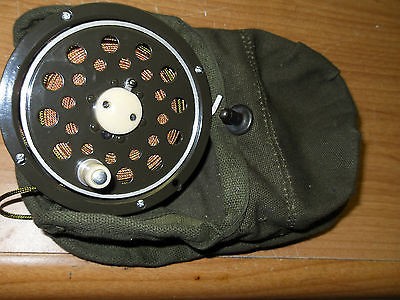
In the early 60's the Army recognized the need to extend the range of the PRC-25 beyond the (optimistic) five or six kilometers the radio was capable of when using the long (3 meter) whip antenna. The simplest way turned out to be the most effective - wrap some wire around the threads on the AB-591 long whip antenna base, screw it into the radio, pay out 150' or so of wire and you can easily double the range of the radio. The use of the AB-591 base was key, because there's an extra long 'nub' on the end of the base. As it screws into the radio that 'nub' contacts a switch deep in the antenna mount, indicating to the radio that a longer, more resonant antenna is in use. The Army wasn't content with telling RTOs to just carry an extra 150' or so of wire. Noooo - they needed to come up with an approved, type classified antenna system. Their solution was actually pretty neat (and cheap) - get some inexpensive commercial fishing reels (it looks like the Army selected the Pflueger Medalist fly fishing reel) and paint them olive drab, wind about 150' of thin but tough phosphor bronze wire on them, provide a crimped-on spade plug at one end of the wire to slip between the antenna mount and the antenna body, stick some simple user instructions on the reel, put it in a small canvas bag and name it the AT-984/G antenna. It worked great!


These things could not have cost Uncle Sam more than $15 each back in 1968. By all reports they were widely issued, so they were not rarities. But since they were not repairable I'm guessing a lot were broken or lost during combat and just written off. Surprisingly, I never saw one in the flesh in my 23 years in the Army (starting back in 1979), but I do remember seeing them in component listings for the PRC-77 radios. Our own field expedient manuals told us to just use a single 150' strand of WD-1 commo wire. A simple and effective substitution.

But I'm a military radio collector and dammit, I want a real, gen-u-ine AT-984 antenna for my collection! So this started me on the quest for a good example of an AT-984. I was surprised to find that there's usually one or two for sale on eBay. Great! But after a few weeks of tracking auctions (or buy-it-now sales) for these things it became apparent that everyone who owns an AT-984 thinks it's rare and valuable enough to contribute significantly to their retirement account. A hundred bucks seems to be the median value for these things right now, with the lower priced 'buy-it-now' ones moving quickly, the higher priced ones hanging around a bit longer but eventually selling for the asking price or racking up quite a few bids on auction. And condition is no impediment to a sale - I've seen beat-to-snot examples that were missing pieces and all bent up like they had been run over by a jeep sell for just as much as pristine, still in the wrapper examples.


Here's one currently on offer on eBay with a bent frame. It's in otherwise OK shape, and seems to be complete, but $104 plus $13.50 shipping for a damaged item? I guess because someone wrote 'B-1-135' (Bravo Company, 1st Battalion, 135th Infantry? Armor? Aviation? Who knows) on it in red paint it's collectible. But remember, this is not an unusual sale - and by comparison with some of the others recently sold on eBay this one is in pristine shape.

So I wait and watch, ready to pounce whenever someone financially solvent enough decides to put an AT-984 up for sale at a reasonable price. Or the current sellers come to their senses.

W8BYH out